A few years ago, I bought an MSR Thru Hiker 100 Wing. It’s a large, lightweight rectangular tarp that can be pitched with walking poles, its own guy lines, or any combination of the two. I was pretty stoked on it and feeling quietly smug about my shelter choices until my buddy Rossco pulled out his tarp. His was a Sea to Summit teepee style shelter that used a single pole to keep it upright. It was light, genuinely roomy, and you could actually sit up inside it. Being the MSR fan that I am, I immediately discovered that MSR made something similar. The Front Range went straight onto my wish list.
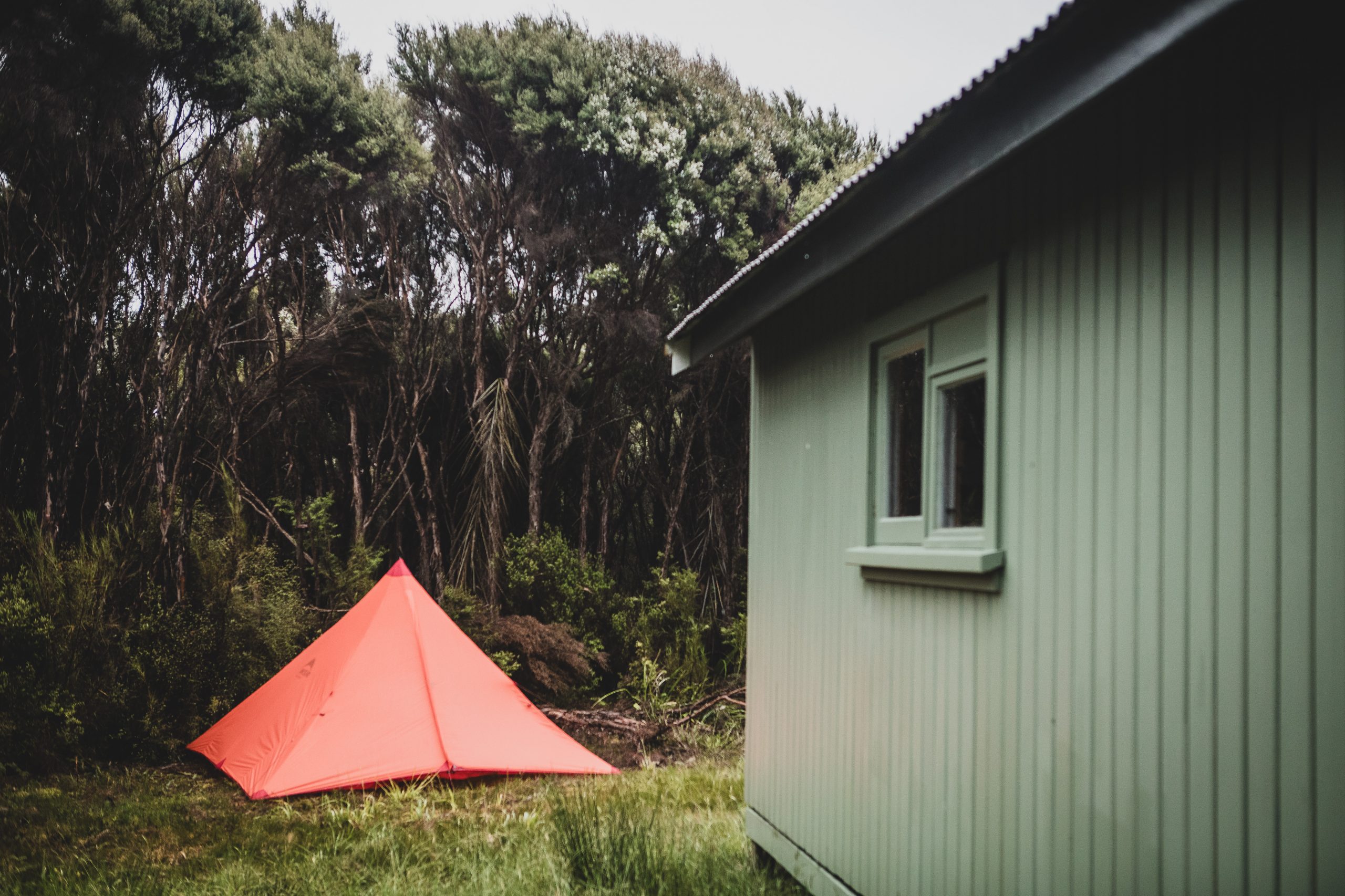
Fast forward a couple of years to last April, and I finally added the Front Range to my shelter quiver. Once pitched it forms a 2.74 square metre, with a peak height of 1.62 metres. MSR claims it can sleep four people. That would be cosy, but it’s absolutely doable. Packed away, it weighs just 900 grams. The 20D ripstop nylon is a little tougher than my Thru Hiker and my Hubba Hubba, so while it’s still very light, it takes up slightly more room than you might expect. That said, with no rigid structure, it’s easy to stuff into odd corners of your pack.
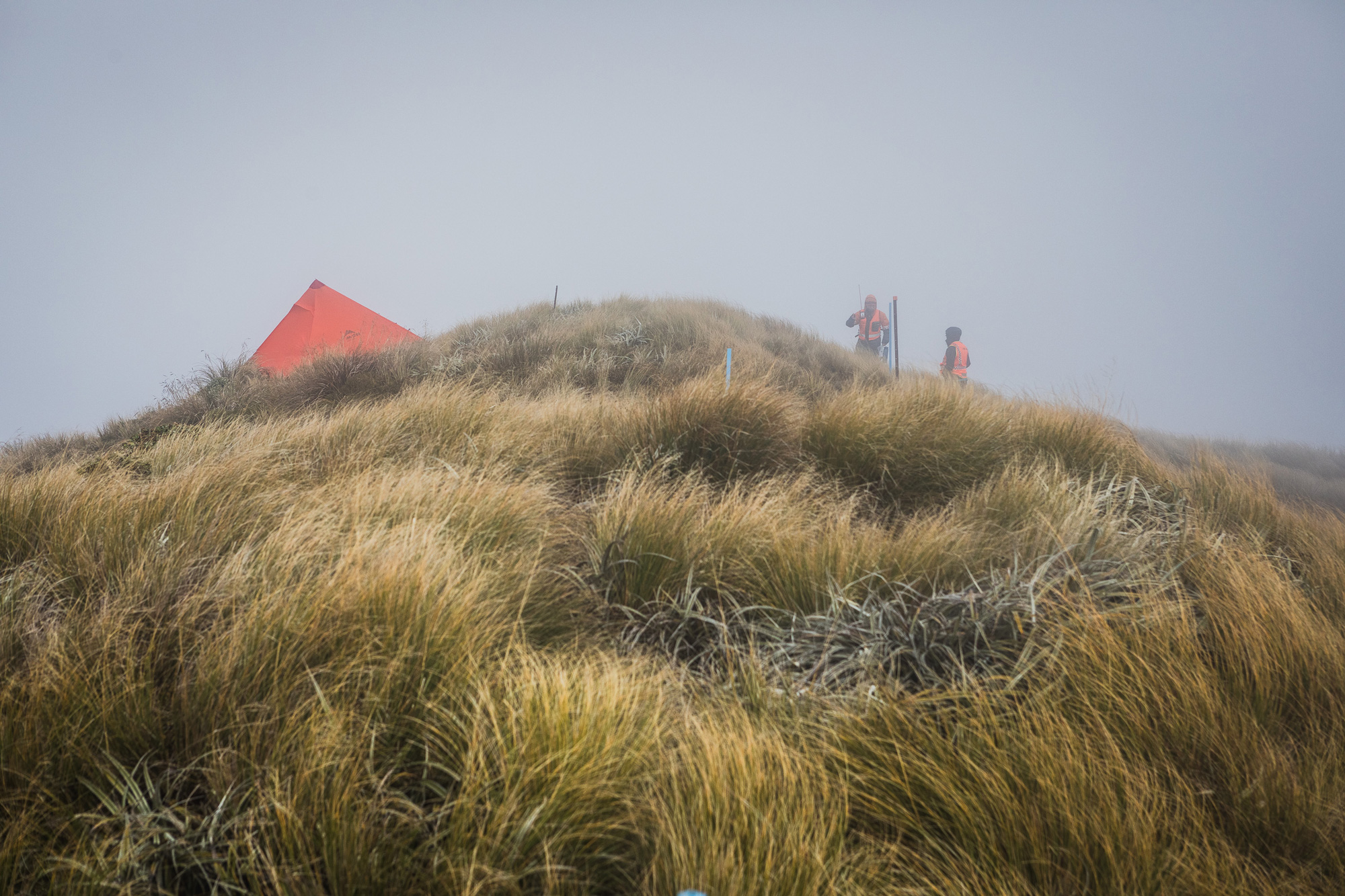
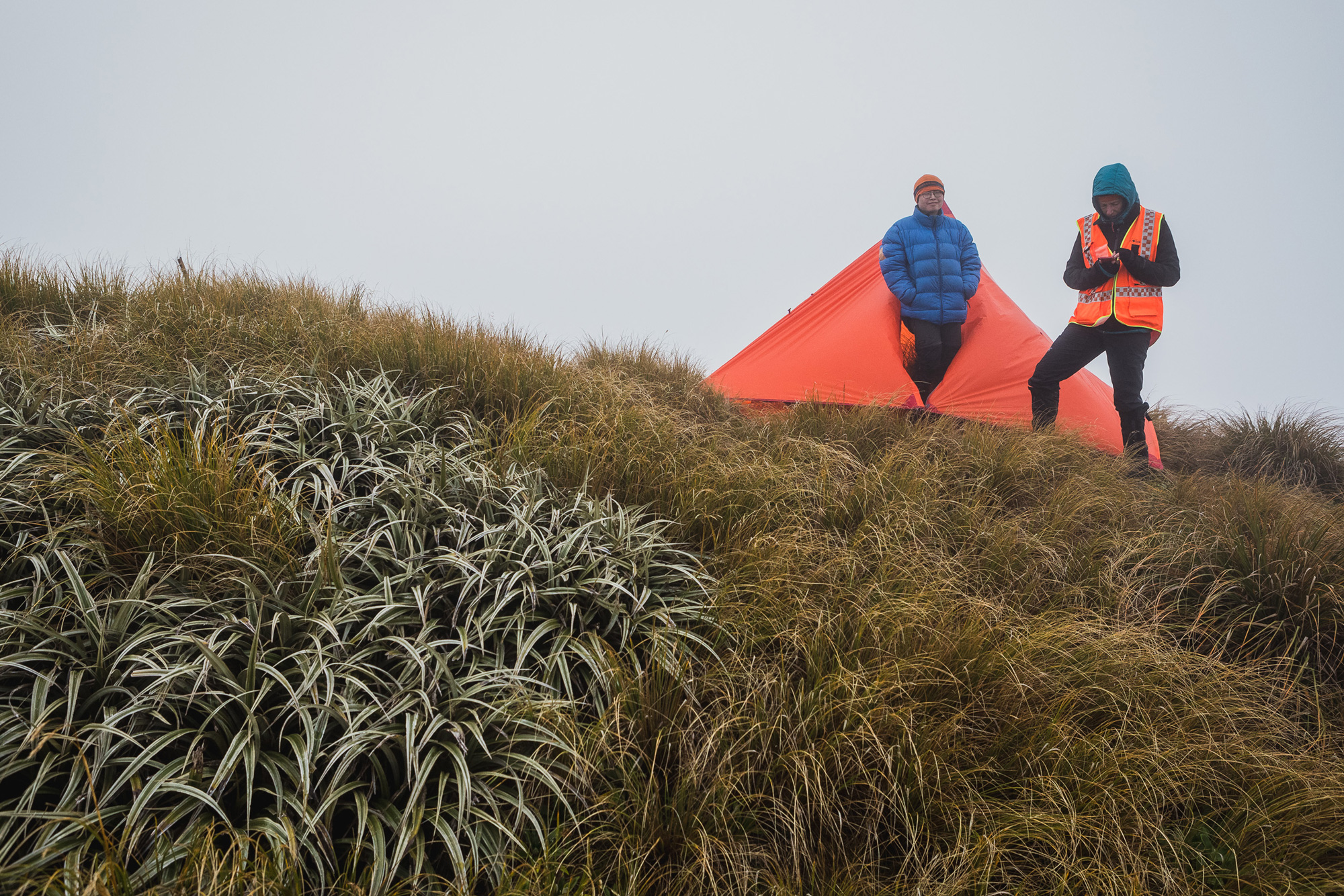
Its first outing was during last year’s Tararua Mountain Race, when Wellington LandSAR was tasked with providing safety support. My team was stationed on Atkinson, and we needed to set up a shelter in case we had to deal with an injured or hypothermic runner. There were some great spots along the infamous false spur, but we needed to stay close to the track. After a few minutes, we found a slightly sloping site with a clear view of the Southern Crossing. It wasn’t blowing a gale, but it was breezy enough to be a good test. I was immediately impressed, and a little surprised, by just how stable the Front Range felt with nothing more than my walking poles holding it up. We didn’t end up needing it for an incident, but it made a perfect windbreak and rest spot while we waited for the first runners to come through.
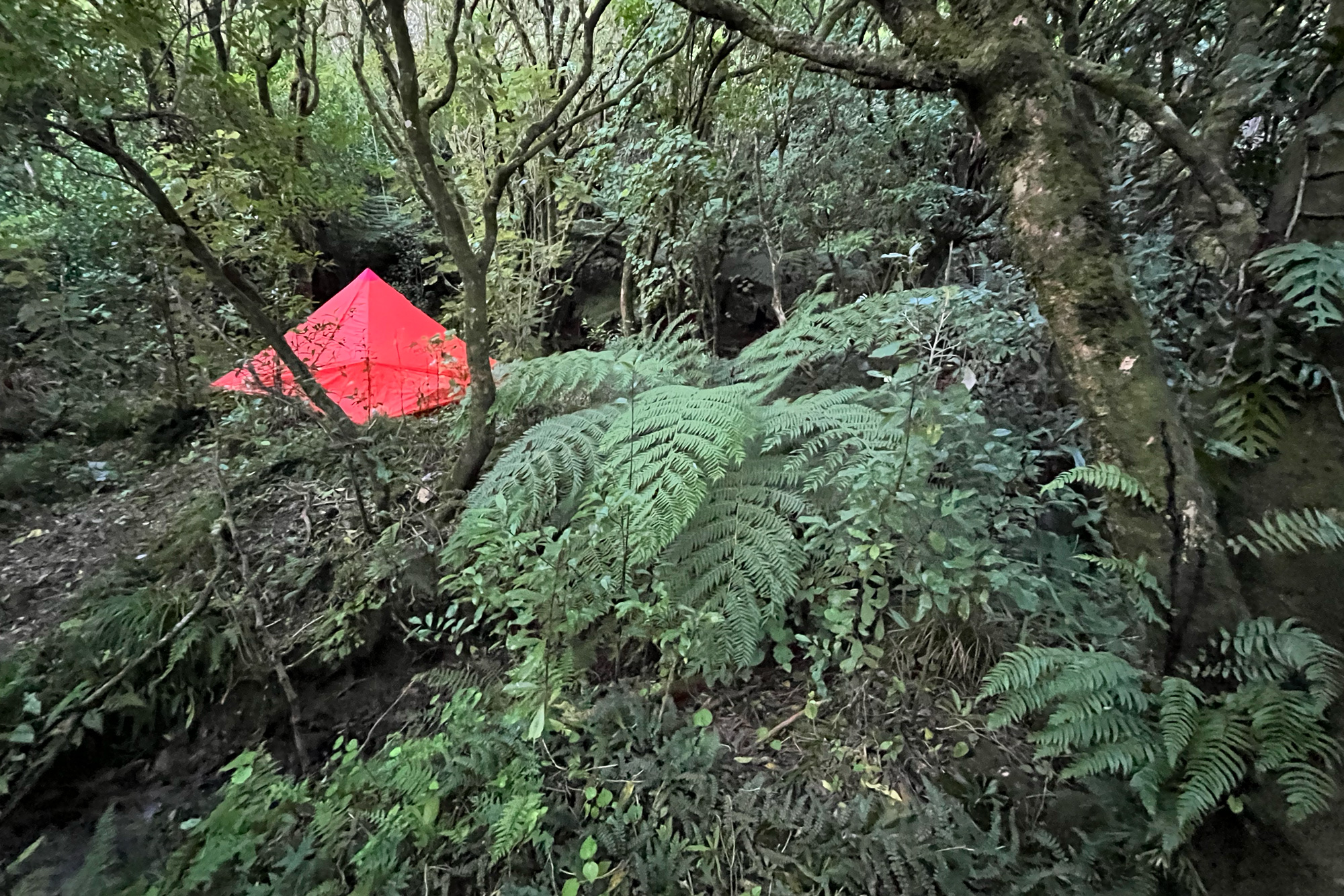
Since then, it’s come into the Ōrongorongo Forest for a couple of overnights, around the Rakiura Southern Circuit, and then a few nights at the Oban Backpackers. Here in the North Island its been amazing. I usually carry a small groundsheet, and the feeling of space both around me and above me borders on luxury. I almost feel guilty about how much room I have. On one Orongorongo trip, we had torrential rain, and I stayed completely dry. Sheltered by the bush, the walking poles barely moved. The only real downside I’ve found is needing a roughly 2.7 square metre area to pitch it. In practice, with just one person inside, this is rarely a deal breaker. As long as there’s a reasonably flat sleeping platform, it works fine, though fitting multiple people in dense bush could be more challenging. On the open tops, it’s a non-issue.
When planning our family Rakiura Southern Circuit trip over Christmas, I was mildly stressed about hut capacity, weather, and sandflies, roughly in that order. There were five of us. Doughboy Hut sleeps eight and Rakeahua Hut only six, so if another group turned up, someone would be sleeping outside. We wanted to be prepared. We briefly considered taking two two-person tents, but by this point, I was fully sold on the Front Range. I’d be carrying poles anyway; the weight made sense, and the odds of all five of us needing it at once were low, or so I hoped.
My main concern was heavy rain and sandflies, so I added MSR’s Bug Floor insert. It’s a mostly mesh inner that uses the same single-pole system and has a bathtub-style waterproof floor. The Front Range Bug Floor insert weighs just over a kilo at 1040 grams and actually packs a little smaller than the fly. Since it sleeps four and has its own stuff sack, my eldest son Elliot, volunteered to carry it.
On our first night at Doughboy Hut, we shared the space with just one other person, so the shelter stayed packed. On the second night, after a long walk to Rakeahua Hut, we arrived to find a DOC ranger already in residence. Just like that, all six bunks were gone. I was quietly disappointed that we probably wouldn’t get to use the tarp and wondered if buying the insert had been unnecessary. A few hours later, we heard voices outside, and two very wet women came through the door. A mother and daughter travelling in the opposite direction, they had spent ten hours slogging through rain and waist-deep bogs. I looked at Elliot. He looked back. We both knew what was happening.
We offered them our bunks and headed outside to pitch the Front Range with the Bug Floor insert. With hindsight and a lot more pitching experience since, I’ve learned that it’s easiest to put the fly up first, then crawl inside out of the rain and peg out the inner. The only awkward moment is lowering the pole briefly to seat it inside the insert, which results in a few seconds of damp fly brushing your back. Once it’s done, it’s dialled. The insert reduces the floor space slightly, but with two people inside, there was still ample room for full packs and fully laid out mats. It’s impressively roomy.
It rained all night, and there was still a bit of wind despite our efforts to find a sheltered site. Once again, the poles barely moved. Elliot and I are both over six feet tall, but because the insert sits well inside the fly, our heads and feet stayed completely dry. We weren’t using a footprint and had no moisture coming through the floor. Packing it down is simply the reverse of pitching it, and it’s actually easier to take the insert down while leaving the fly up, especially with two people. There’s so much room that you can roll the inner neatly without any rush.
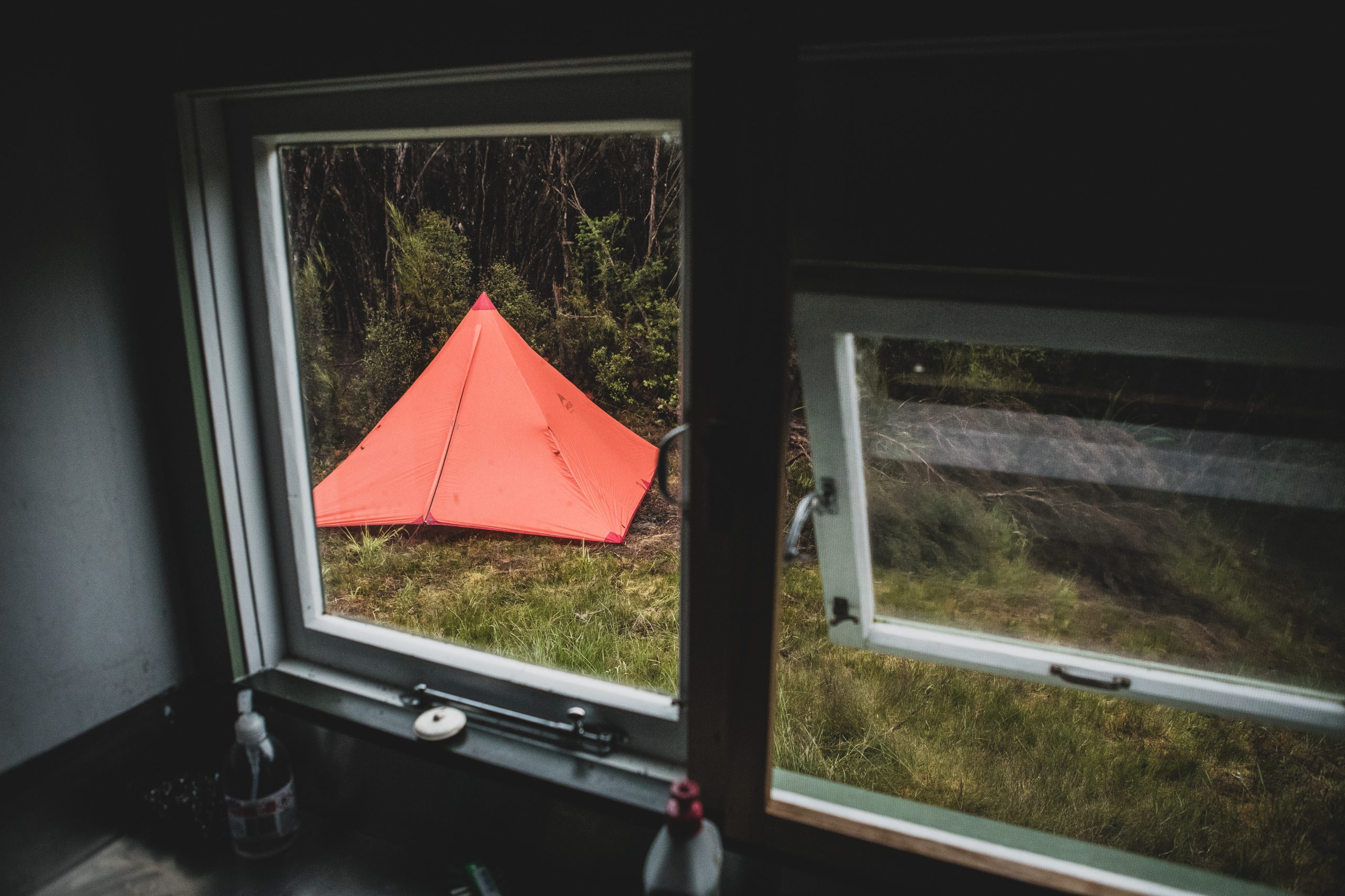
When we finally made it back to Oban we had two nights booked at the local backpackers. The kids took a room, and Emma and I pitched the Front Range on the flattest, lushest grass I’ve ever seen. The weather over the next two days was a mixed bag. Gale force winds, heavy rain, and occasional patches of blue sky. Going to bed in the wind, I was apprehensive. I was convinced the poles would snap. Just like outside Rakehua, there was no sign of bending or stress.
In the strongest gusts, the fly would occasionally be pushed into the mesh insert and transfer the odd drop of water through, but it was minor. I don’t think many ultralight tarp shelters would fare much better. With only two of us inside, the amount of space was again a luxury. There are no vestibules with this shelter, but on calm, wet nights, boots and gear can live happily between the fly and the insert. In strong winds, you need to be a bit more deliberate with pack placement to create space for wet gear you don’t want inside.
After ten months of use, I’m completely sold on the Front Range and reach for it almost every time I head out. I’d still take the Thru Hiker for a simple day mission, but if space isn’t a concern, I’ll choose four walls every time.
It’s worth noting that we did eventually find the upper limit of what walking poles can handle. Over the Wellington Anniversary weekend, we headed north for a family camping trip at Hahei. We only own tramping tents, and buoyed by our South Island experience, we took the Front Range again. The weather deteriorated steadily, culminating in a severe storm that caused fatalities not far from where we were camped. Winds reached around 120 kilometres an hour, and the rain was biblical. While we stayed dry, those winds proved too much for my Black Diamond Compactor poles. One violent gust snapped them at a section joint. Fortunately, we were able to improvise a splint, which held through the night despite continued extreme gusts. We packed up and left the next day. That evening, the local river flooded and trapped everyone remaining in the campground.
After nearly a year of real use, from LandSAR duties and family trips to multi-day walks in exposed weather, the MSR Front Range has earned its place as my go-to shelter. It’s not a tent for every situation, and it asks a bit more of you in terms of site selection and setup, but what you get in return is space, stability, and versatility at a weight that still feels almost unfair. Paired with the Bug Floor insert it becomes a genuinely capable four-season option for everything from solo missions to backup shelter for a family. If you value simplicity, adaptability, and gear that disappears until you really need it, the Front Range is hard to beat.